Radon in Harrisburg is common. It's also fixable.
Elevated levels turn up across this region every week. Mitigation brings them down, verified by a test instead of a promise.
Radon mitigation and testing for Harrisburg homes
This is a radon shop, plainly put. Homes in and around Harrisburg get tested, homes that test high get mitigation systems, and people staring at a surprising number get straight answers about what it means.
The work spans the whole problem. Radon mitigation, the design-and-install work that brings an elevated home down, is the center of it. Testing answers the question for homes that have never asked it. And because so much local radon work happens inside real-estate deals, coordinating around closings is its own specialty here, not an inconvenience.
One stance runs through all of it: verification over promises. A mitigation system is designed to bring a home below the EPA action level. No honest contractor guarantees a specific number before the work is done. What gets guaranteed instead is the measurement. Every system’s job is proven by a post-installation test, on paper, so you’re never asked to take a fan’s word for it.
If you’re here because a report just landed in your inbox, take the first card above. It was written for exactly that moment. Everyone else can start with the estimate, the service list below, or the guides that explain the whole trade in plain English.
Our Services
-
Radon Mitigation
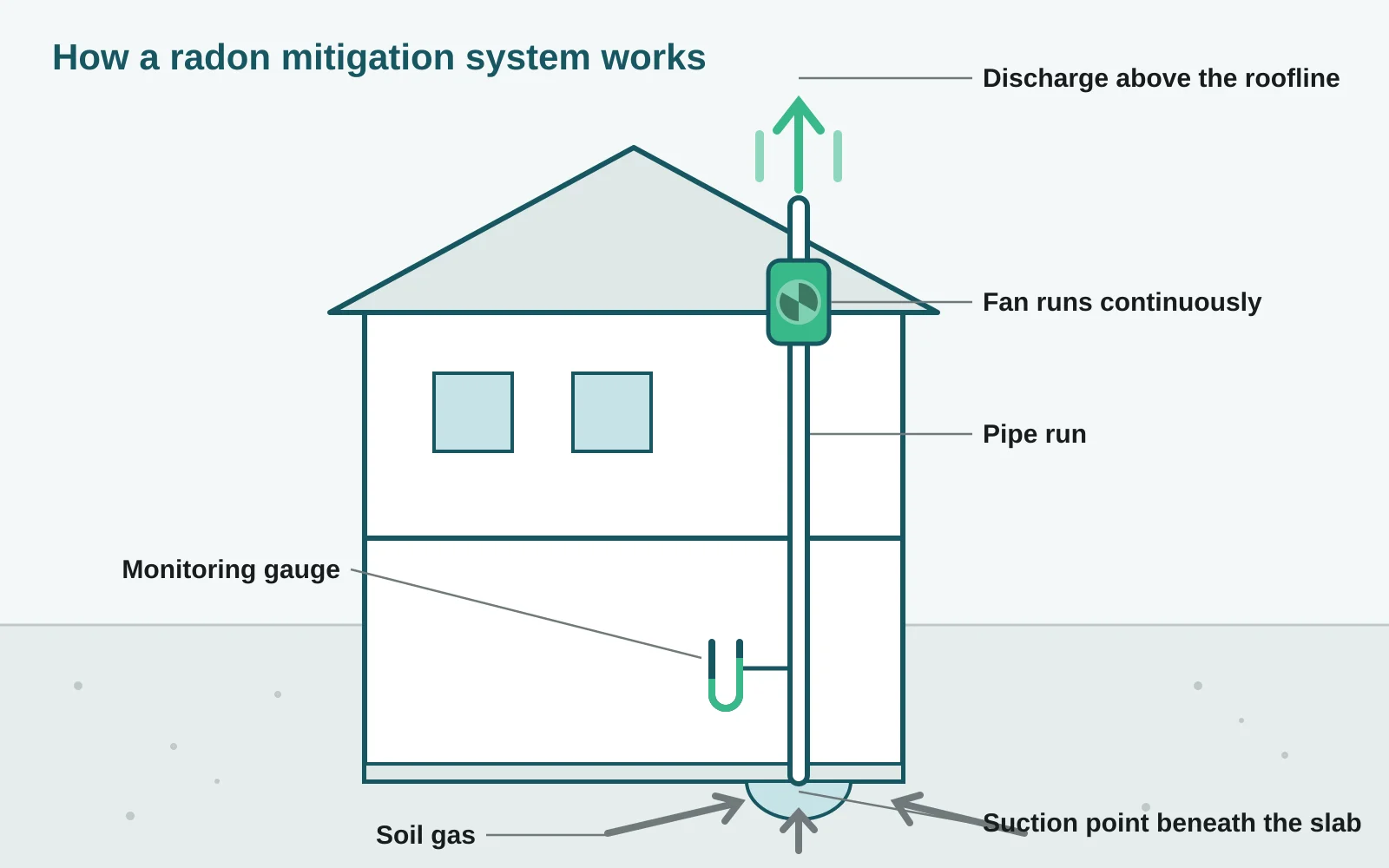
A mitigation system collects the gas beneath the home and vents it safely above the roofline — before it can build up indoors.
Learn more
-
Radon Testing
Radon can't be seen or smelled — a test is the only way to know a home's level.
Learn more
-
Radon for Home Sales
Radon findings in a purchase usually come with a deadline attached — the process works better when someone's done it on a closing schedule before.
Learn more
-
Radon Fan Replacement & System Repair
Mitigation fans run continuously for years — and like anything that runs continuously, they eventually wear out.
Learn more
-
Passive Radon System Activation
Many newer homes were built with a passive radon rough-in — a pipe that's ready for a fan but doesn't have one yet.
Learn more
-
Crawlspace Radon Mitigation
Homes over crawlspaces need a different approach — typically a sealed membrane over the exposed soil, tied into the venting system.
Learn more
-
Commercial & Multifamily Radon
Schools, workplaces, and multifamily buildings test and mitigate at a different scale, often with compliance documentation attached.
Learn more
-
Radon in Well Water
In some regions, well water carries radon into the home when it runs — a separate problem with separate treatment approaches.
Learn more
What radon test numbers mean, per published guidance
Under 2 pCi/L
- EPA guidance
- No action called for
- What usually happens next
- Retest in a few years
2–4 pCi/L
- EPA guidance
- Consider fixing
- What usually happens next
- A confirming test, then a decision
4 pCi/L and above
- EPA guidance
- Fix the home
- What usually happens next
- Mitigation, verified by retest
| Test result | EPA guidance | What usually happens next |
|---|---|---|
| Under 2 pCi/L | No action called for | Retest in a few years |
| 2–4 pCi/L | Consider fixing | A confirming test, then a decision |
| 4 pCi/L and above | Fix the home | Mitigation, verified by retest |
The scale is published EPA consumer guidance. It describes ranges, not any single household's risk.
Assessment, system, retest — the whole arc
Radon work, done honestly, is a three-beat sequence.
First, someone reads your foundation. Radon enters through whatever the house offers: slab cracks, sump pits, block walls, crawlspace dirt. So the assessment walks the basement before any design exists. What kind of foundation, where the gas likely moves, where a pipe can run. The house dictates; the design listens.
Then the system. A suction point below the home, a sealed pipe, and a continuously running fan collect the soil gas and vent it above the roofline, out where it dilutes harmlessly into open air, instead of pooling in the rooms downstairs. Different foundations get different versions of this machine, but the principle never changes: catch the gas below the house, release it above.
Last, the retest. Days after the fan starts, a new test measures what actually changed. That number — not the installer’s confidence — is the deliverable, and it’s what separates finished radon work from expensive plumbing.
The full guide to how radon mitigation works walks every component with pictures, and what radon levels mean decodes the units before your own report arrives.
How a mitigation project typically goes
- 1
Assessment
The foundation, sump, and layout get read before anything gets proposed.
- 2
System approach
The design follows the house: slab, basement, crawlspace, or a mix.
- 3
Installation
Suction point, sealed pipe run, fan, and gauge, typically within a day.
- 4
Verification test
A follow-up test measures the new level and puts the result in writing.
Holding a number you're not sure about, or a home that's never been tested? Start with an estimate.
The ground under south-central Pennsylvania
Radon is a geology story, and this region sits on an eventful chapter. The limestone running under the Cumberland Valley, the shales east of the river, the folded ridges north of the city. All of it carries enough uranium that the soil above steadily produces radon gas. Houses concentrate what the ground gives them, and around Harrisburg the ground is generous.
The state’s radon program publishes the local numbers, from county designations down to results by ZIP code, and they’re worth seeing for yourself in radon levels in your area. That page carries the data so this one doesn’t have to editorialize.
Housing stock shapes the picture too. This region builds basements, because frost depth has demanded it for two centuries, and that puts living space and storage rooms in direct contact with the soil. The older boroughs stack brick homes on stone foundations with a hundred years of settled joints. Postwar suburbs run on hollow block, which offers soil gas a path through its own cores. The newer townhouse rows sit on slabs, one shrinkage crack from the dirt. Each era leaks in its own dialect, and mitigation design has an answer for each one.
None of that says your house is high. Two neighboring homes read differently all the time. Soil seams, foundation details, and how each house breathes all move the number. What the region’s geology does say is that testing here isn’t paranoia. It’s the local equivalent of checking the sump pump before a wet spring: cheap, quick, and occasionally the thing that matters most.
Areas We Serve
- Harrisburg
- Camp Hill
- Mechanicsburg
- Carlisle
- Hershey
- Hummelstown
- Middletown
- New Cumberland
- Enola
- Dillsburg
- Elizabethtown
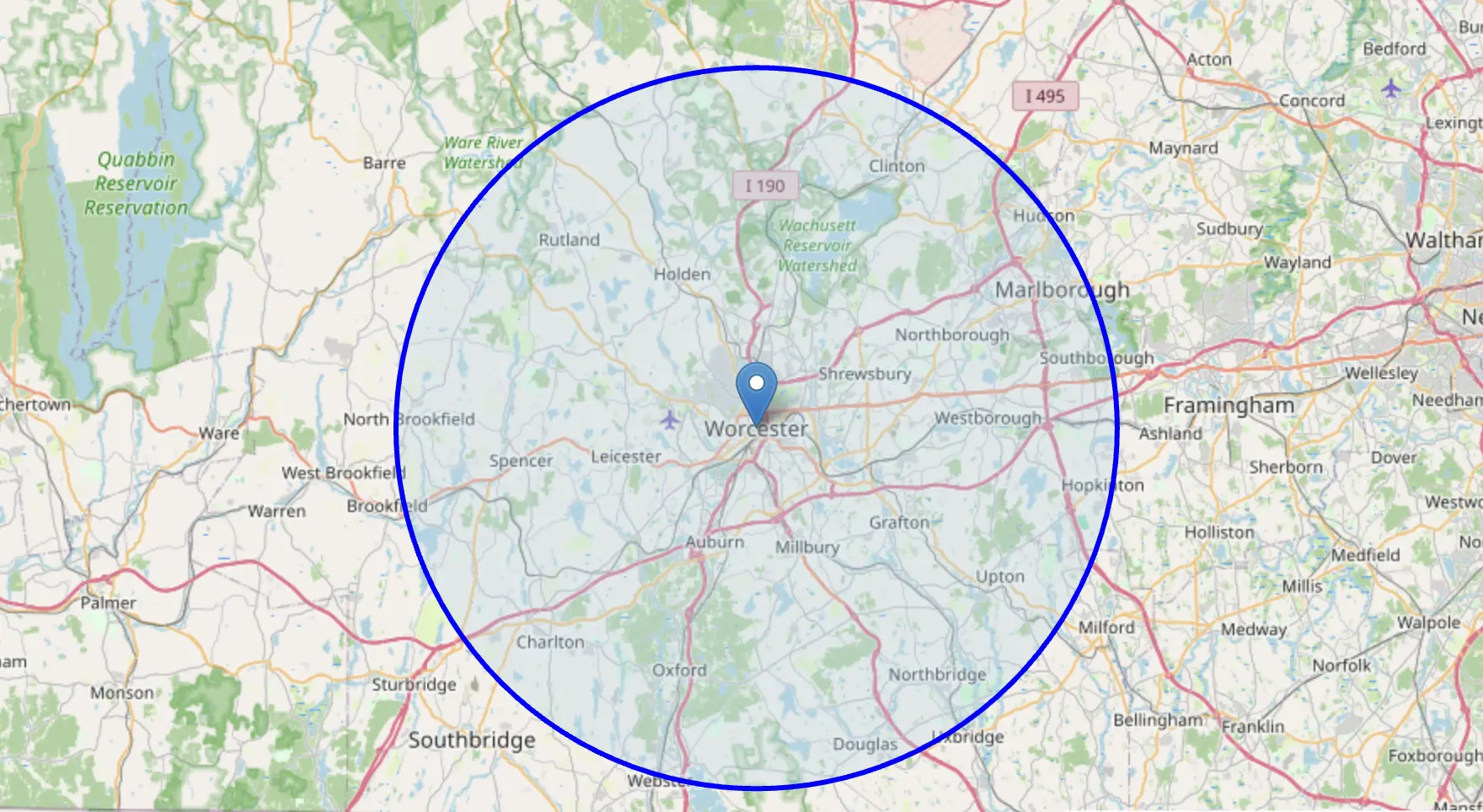
Find local details for each community on our service-area pages.
Frequently Asked Questions
Is radon really a problem in this area?
Elevated radon levels show up in homes across much of the country, and many regions test high often enough that the state radon program publishes local data. The only way to know about a specific home is to test it. Two houses on the same street can read very differently.
What is radon, in plain terms?
Radon is a naturally occurring radioactive gas that forms in the soil and rock under a home. It can enter through the foundation and build up indoors, and it has no color, smell, or taste. Public-health agencies, including the EPA, identify long-term radon exposure as a leading cause of lung cancer. That is why testing is recommended — it is a known problem with a well-understood fix.
What radon level requires action?
The EPA's action level is 4 picocuries per liter (pCi/L). At or above that number, the EPA recommends fixing the home. Between 2 and 4 pCi/L, the EPA suggests considering mitigation. These are published guidelines, and a test tells you where your home stands.
What does a radon mitigation system involve?
A mitigation system collects soil gas from beneath the home and vents it above the roofline before it can build up indoors. A typical system has a suction point under the foundation, a pipe run, a fan that runs continuously, and a small gauge that shows the system is pulling. The right design depends on the home's foundation and layout, which is what the assessment works out.
Does radon mitigation actually work?
Mitigation is a well-established fix. Systems are designed to bring levels below the action level, and a post-installation test is how the result gets verified. That retest — not a sales promise — is what tells you the system is doing its job.
Do I need to retest after mitigation?
Yes. A test after installation verifies the system brought levels down, and periodic retesting afterward is standard practice. The gauge on the system shows the fan is pulling, but only a test measures the actual level.